
Airport Management
Creative Direction/Brand startegy
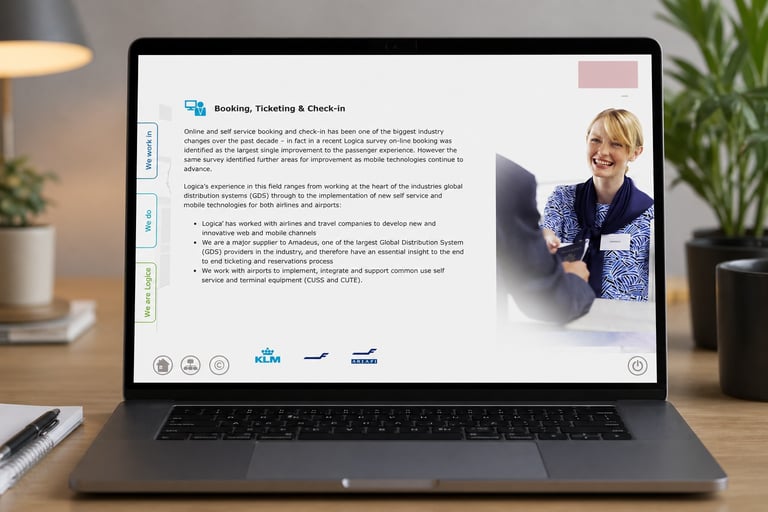
End-to-end UX for a complex, multi-stakeholder enterprise platform serving a global public sector airport authority. RFP design work that secured a multi-million dollar engagement.
↓
Outcome
Won
Multi-million dollar
Government Authority
Deal Value
Client
Context
A system where every failure has real-world consequences.
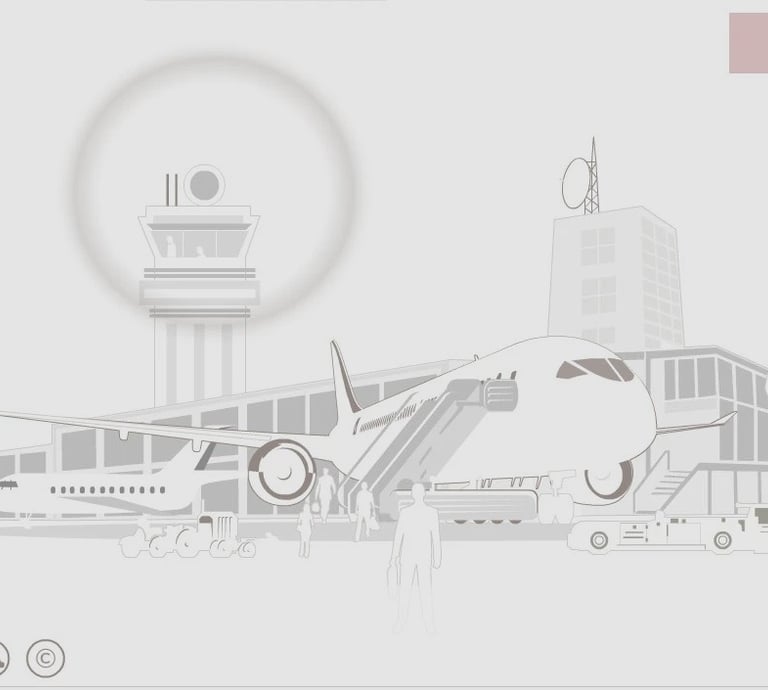
Airport management systems are among the most complex enterprise platforms in existence. They are not productivity tools — they are operational infrastructure. When a system fails, flights are delayed, security is compromised, and hundreds of thousands of passengers are affected.
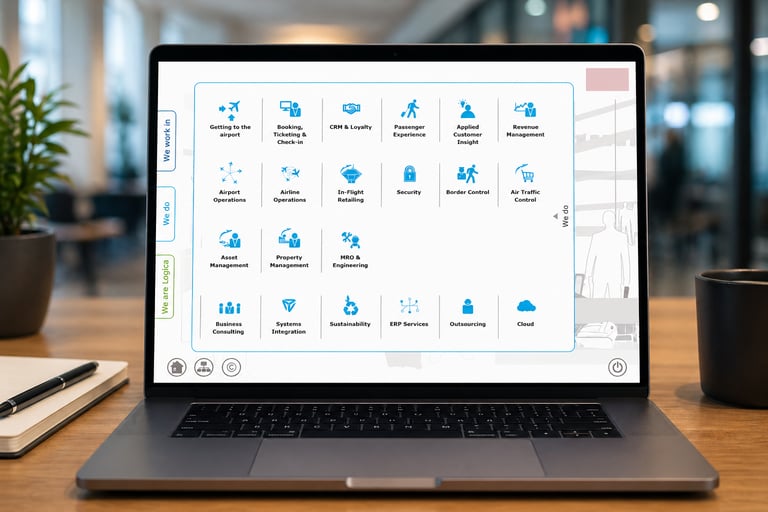
The brief was a competitive RFP from an international public sector airport authority. Our task: design an end-to-end UX that demonstrated a complete understanding of how a modern international airport actually works — every workflow, every touchpoint, every stakeholder — before a single line of code was written.
Objectives
Six distinct user groups. One coherent system.
Operations
Real-time flight status, gate management, turnaround coordination. Needs density of information with instant legibility under pressure.
Access control, incident logging, checkpoint management. Zero tolerance for ambiguity. Interface must eliminate interpretation errors.
Baggage handling, cargo tracking, vehicle routing. Often operating in motion — interface must work on mobile, in noise, with gloves.
Logistics & Ground
Security
Passenger Services
Check-in, assistance, information desk. Serving a wide and unpredictable public. Interface must be fast, forgiving, and language-flexible.
KPI dashboards, capacity planning, incident reporting. Needs executive-level data synthesis — not raw feeds.
System health monitoring, integration management, user administration. Needs technical depth without sacrificing usability.
IT & Systems
Management
The design won the deal.
The client cited the quality and depth of the UX work as a decisive factor in awarding the contract. The design didn't just answer the brief — it demonstrated a level of operational understanding that competitors did not match.
The UX work had to prove that we understood the operational reality of running an international airport — not just that we could design a clean interface.