Personal project · Social impact

Hunnar Setu

What if the artisans who carry forward India's traditional crafts could access the digital economy on their own terms?

The challenge

India's 9 million rural artisans preserve craft traditions that define the country's cultural identity. Yet the digital economy — the one place where their work could reach global buyers directly — remains entirely inaccessible to them. Without digital skills, a market identity, or the confidence to navigate smartphones, they remain dependent on middlemen who take up to 40% of every sale.

The challenge wasn't technology. It was trust, language, and a system built for people nothing like them.
Field research

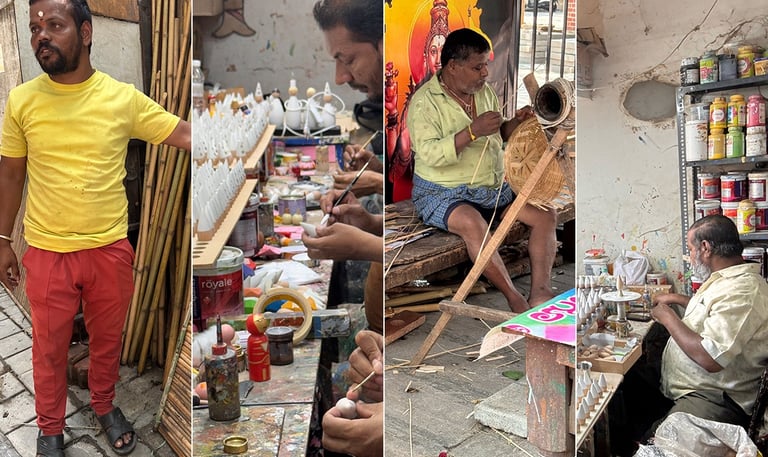
30+ interviews. 5 states. One urgent truth.

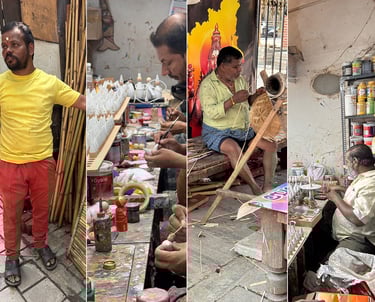
Before designing anything, we went to where the artisans were. Field interviews across Kurukshetra, Mumbai, Telangana, Bengaluru, and Pondicherry — talking directly to artisans about their daily realities, their relationship with technology, and what felt possible versus what felt threatening.
Ideation & solution

Four ideas. One clear direction.

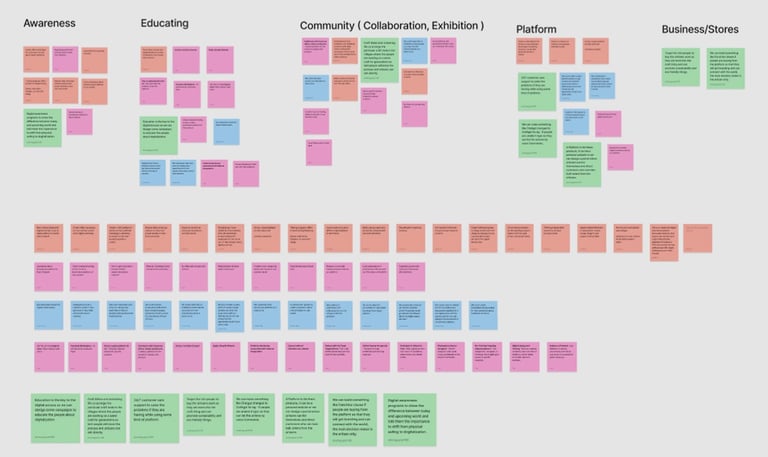
After field visits, we ran collaborative brainstorming sessions mapping ideas across awareness, learning, community, and visibility. Four shortlisted concepts were evaluated through a SWOT lens — assessed for feasibility, user relevance, and long-term empowerment potential.

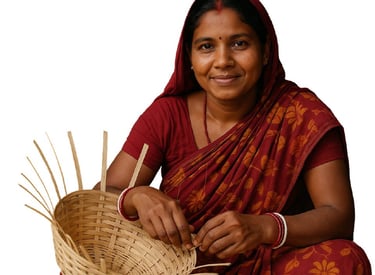
Meet Radha

A 32-year-old bamboo artisan from a small village near Agartala, Tripura. She has been making baskets for 15 years, earning ~₹150/day, selling through middlemen.

9M

40%

of income lost to middlemen on every sale

rural artisans preserving India's craft heritage
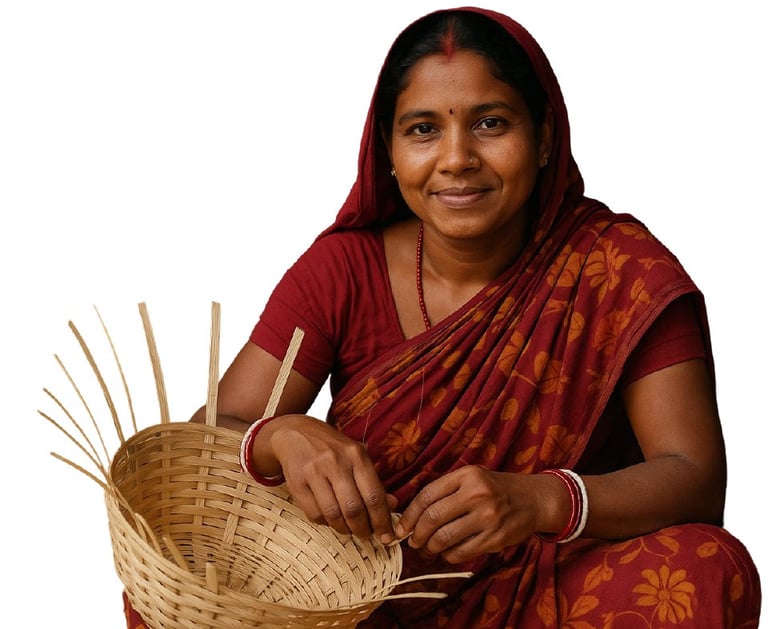
A 32-year-old bamboo artisan from a small village near Agartala, Tripura

Pain points

  • No direct customers, middlemen take 40% cut.

  • Doesn’t know how to use a smartphone for business.

  • No idea how to price her products, or how buyers in cities value them.

  • She can barely read local newspapers, doesn’t trust tech.

80%

74%

earn under ₹5,000/month

rely on intermediaries for market access

Powerful MVP Model

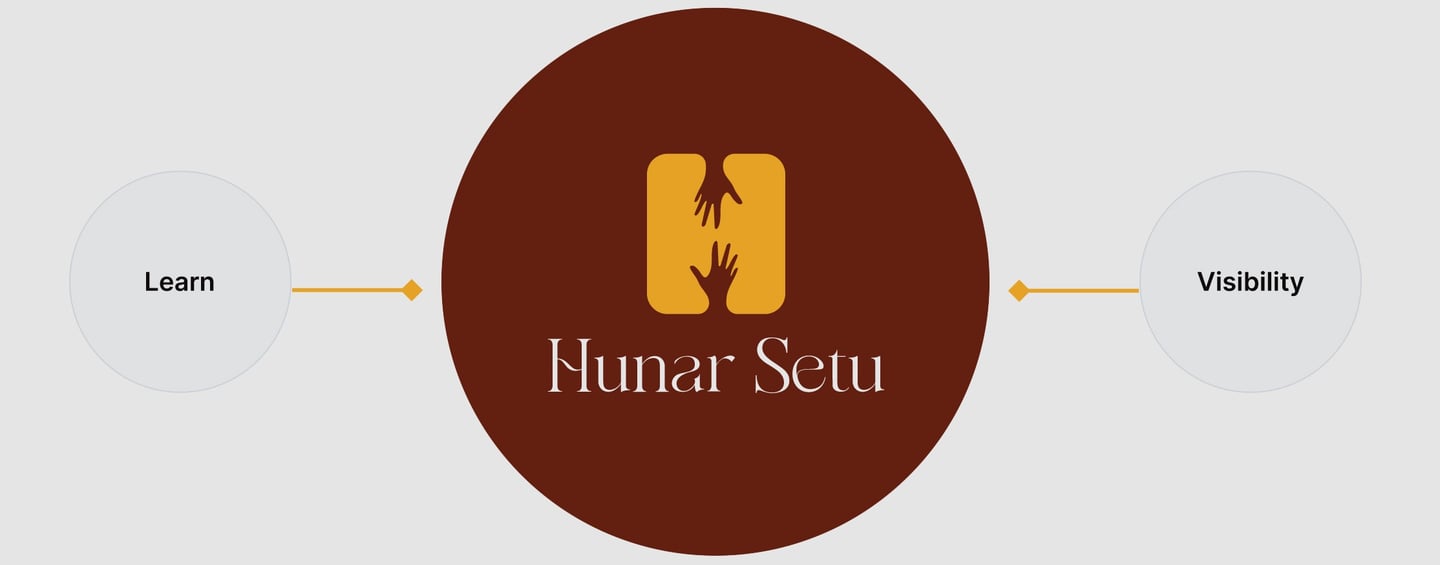
Our MVP connects two pillars learning and visibility designed to empower artisans to upskill and showcase their talent directly to the market

They shaped our culture. Hunnar Setu is shaping their future.

90%

preferred video learning content over text

found online courses useful for improving their businessa

felt they were actively learning something new

75%

65%

Reflection & Impact

Design as a bridge, not a product.

Hunnar Setu is not a commercial project. It is a demonstration of what happens when design starts with the people furthest from the system — and works backwards from their reality, not forward from a brief.

The research confirmed that the barriers were never about capability. They were about access, language, and trust. Every design decision — from vernacular voice-over to badge-based credibility — was made in service of closing that gap.

For a platform at MVP stage, the validation signals were strong: 90% of tested artisans preferred the video-first learning format, all participants agreed they were learning something useful, and peer recommendation intent was unanimous — artisans believed others in their community would benefit without being prompted.

The strategic opportunity is significant. With 9 million artisans and less than 1% reached by digital markets, even a 5% shift in platform adoption represents hundreds of thousands of livelihoods transformed. The model is replicable across craft communities, languages, and geographies.

They shaped our culture.
Hunnar Setu is shaping their future.

This project shaped how I think about every brief I take — who is the design really for, and what does it need to do for them before it does anything for the business?